UK · Art / Writing / Architecture · MMXXVI

Richard FAdams.

Computational expressionist work, long essays on technology and the philosophy of making, and three decades inside the machines that move things.


I. Antiselfies — 2020–Ongoing

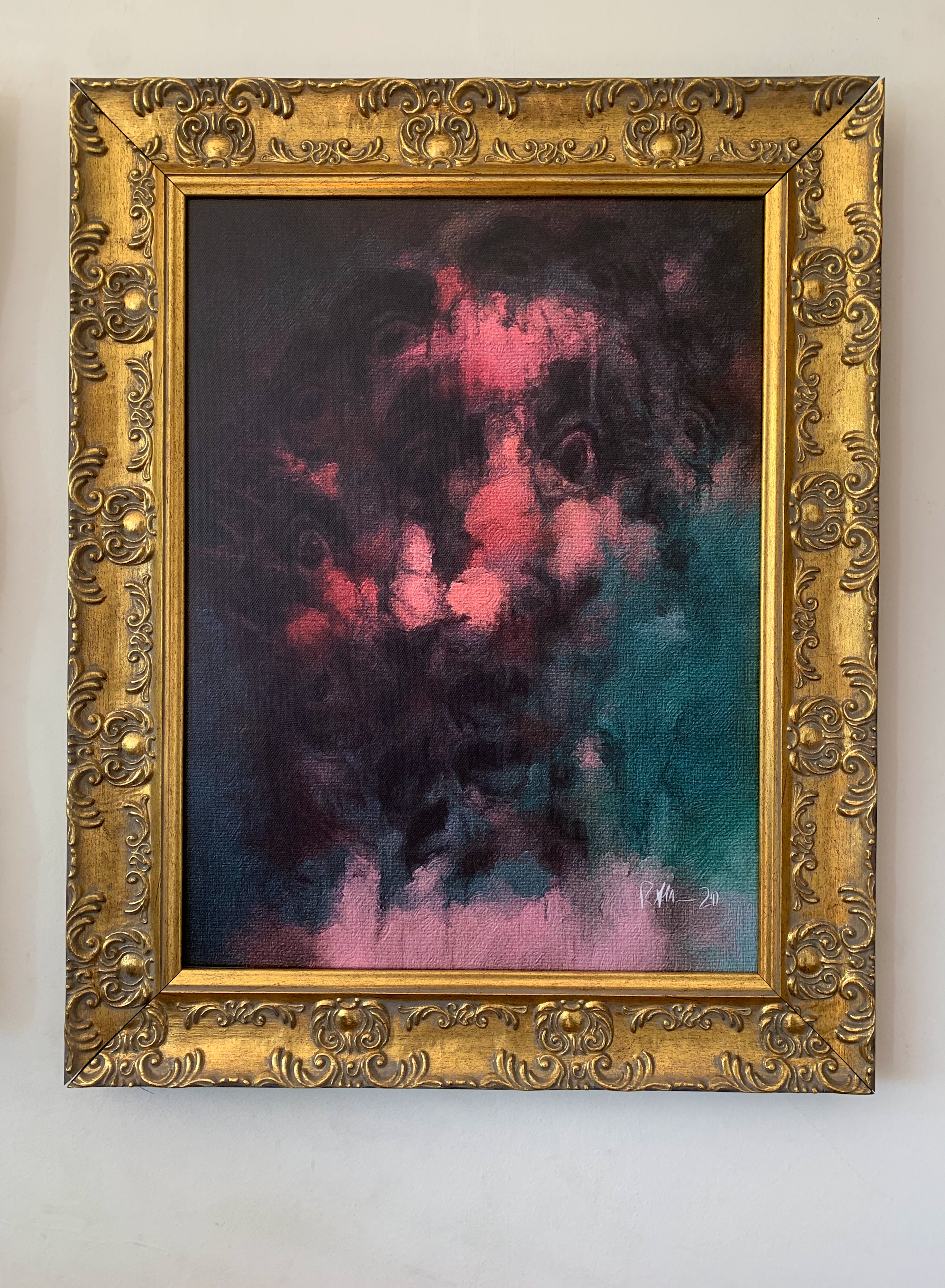
A simulacrum, framed.

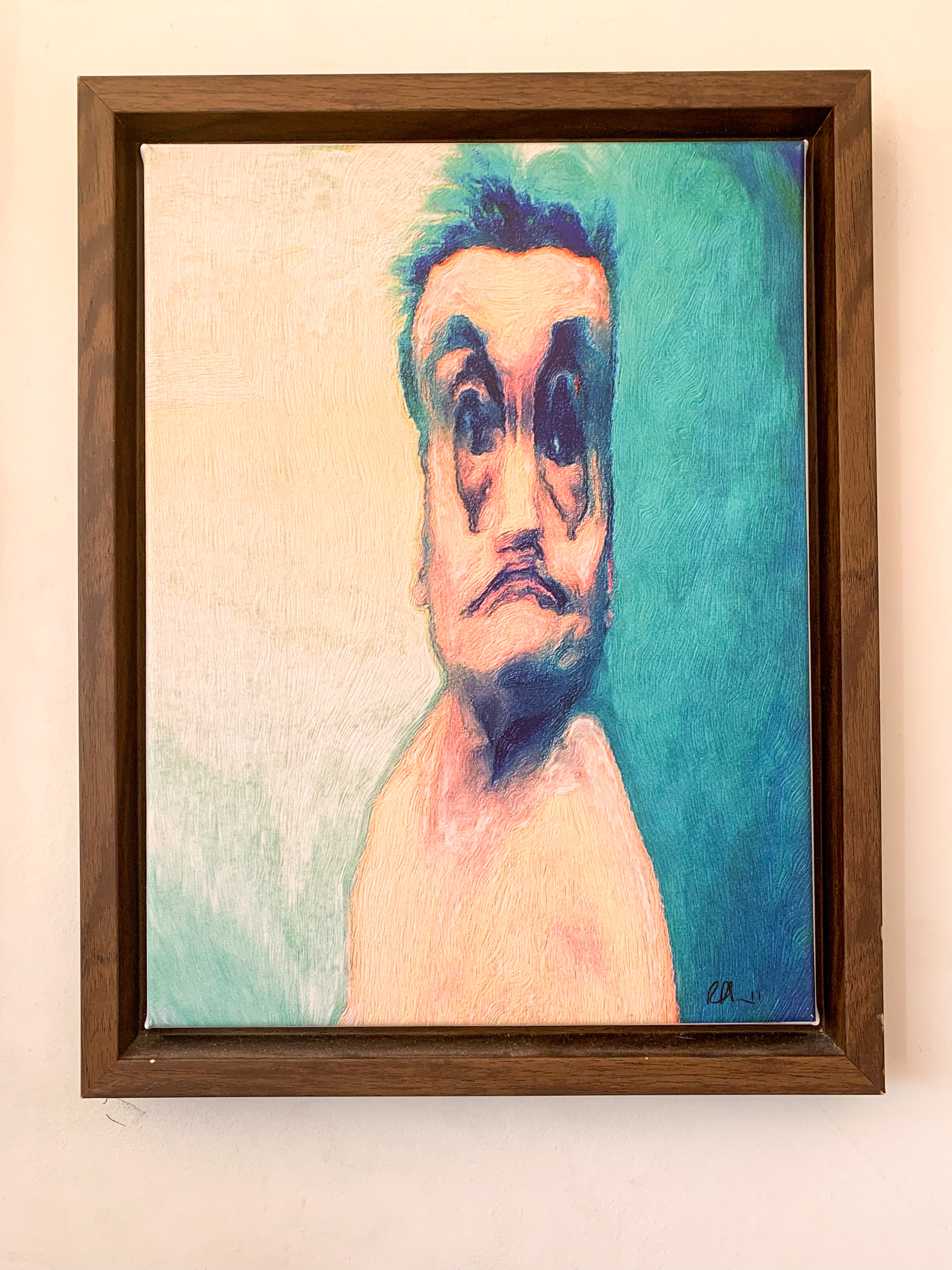
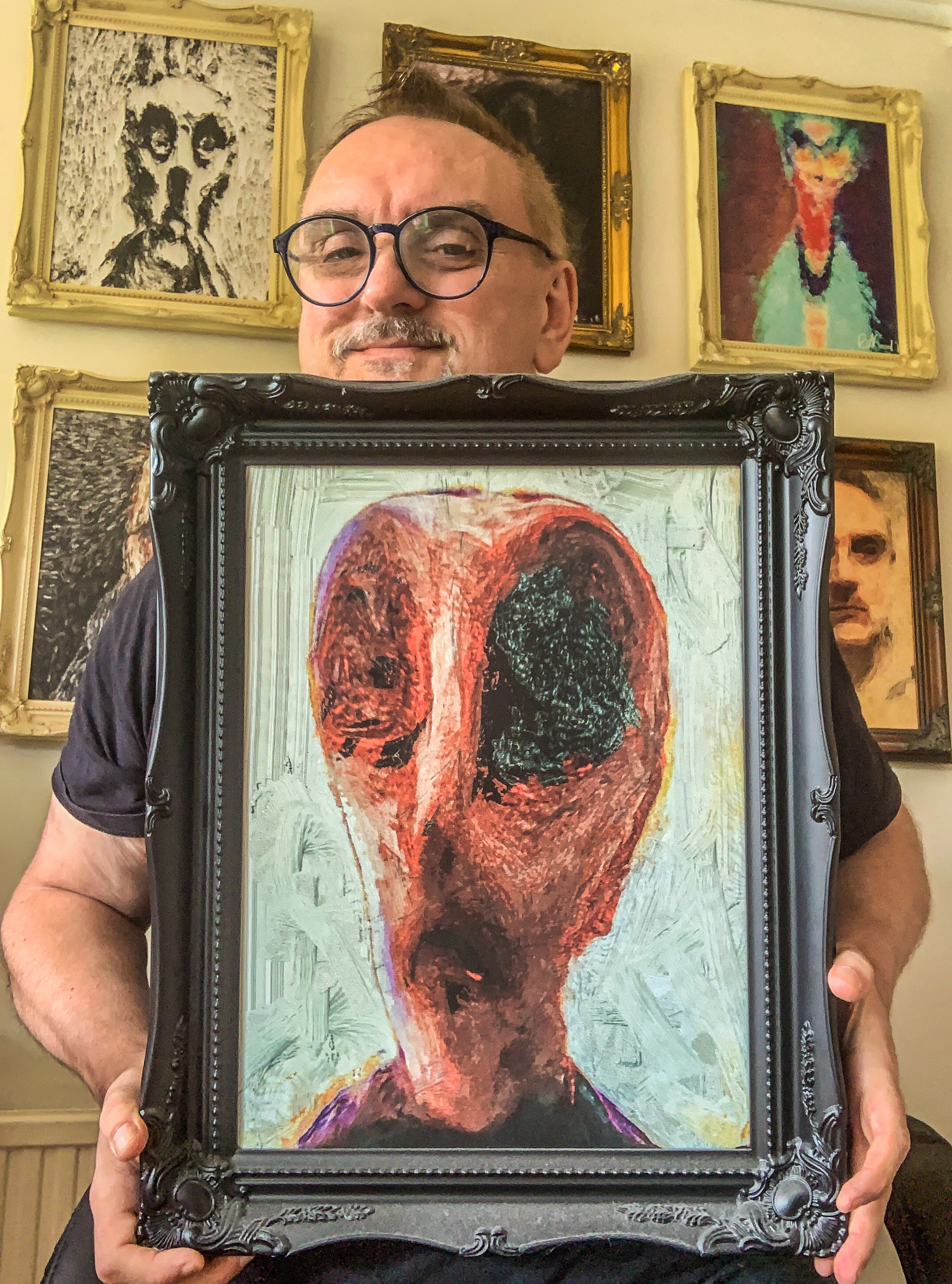
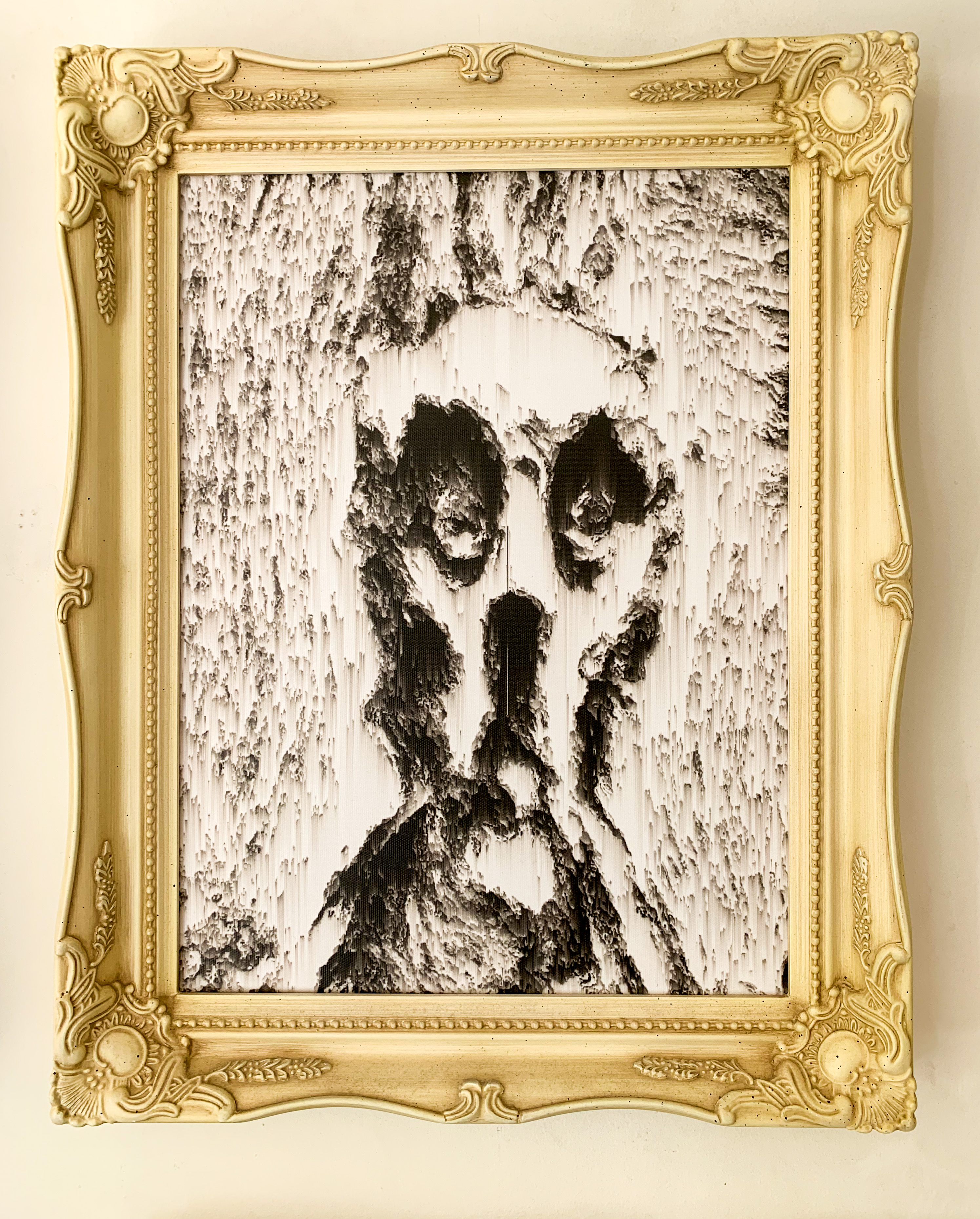
After he watched himself die while on an operating table, the antiselfies began as a way to look hard at mortality through the apparatus of digital expressionism. Drawings, glitched into Baudrillardian simulacra, then rendered on canvas and bound in fake distressed frames so the simulacrum stays intact end to end.

The references are old and obvious. Bacon for the meat. Vermeer for the light. Hals for the painterly hand that refuses to settle. The machine is there. So is the doubt about which is which.

All these works are produced with a mix of digital and computational techniques. They are designed as Baudrillardian simulacra, and they explore what the technology can offer me as an artist. They are finally rendered on canvas and framed with fake distressed frames to complete the simulacrum.
— RFA

II. The Febrile Mind — Substack

Essays at the seam of technology
and the made thing.

Long form. Slow read. Pieces on the hollowing effects of cultural personalisation, on photographers who are not artists, on the kinds of wisdom you only earn by surviving something.

  1. 01 The Hollowing Culture · Personalisation
  2. 02 The Unlocking Sequel · AI
  3. 03 Not Every Photographer Is an Artist Polemic · Aesthetics
  4. 04 Everyone Can Make, and Should Essay · Democratisation
  5. 05 The Wisdom Problem Long Read · Mortality
  6. 06 Choose Light Fiction · Short Story

III. Poetry — Not Yet

Poems about life and death.

A first collection, written over fifteen years. Poems built from scenes rather than arguments: sonnets, free verse and poems in broad Yorkshire.

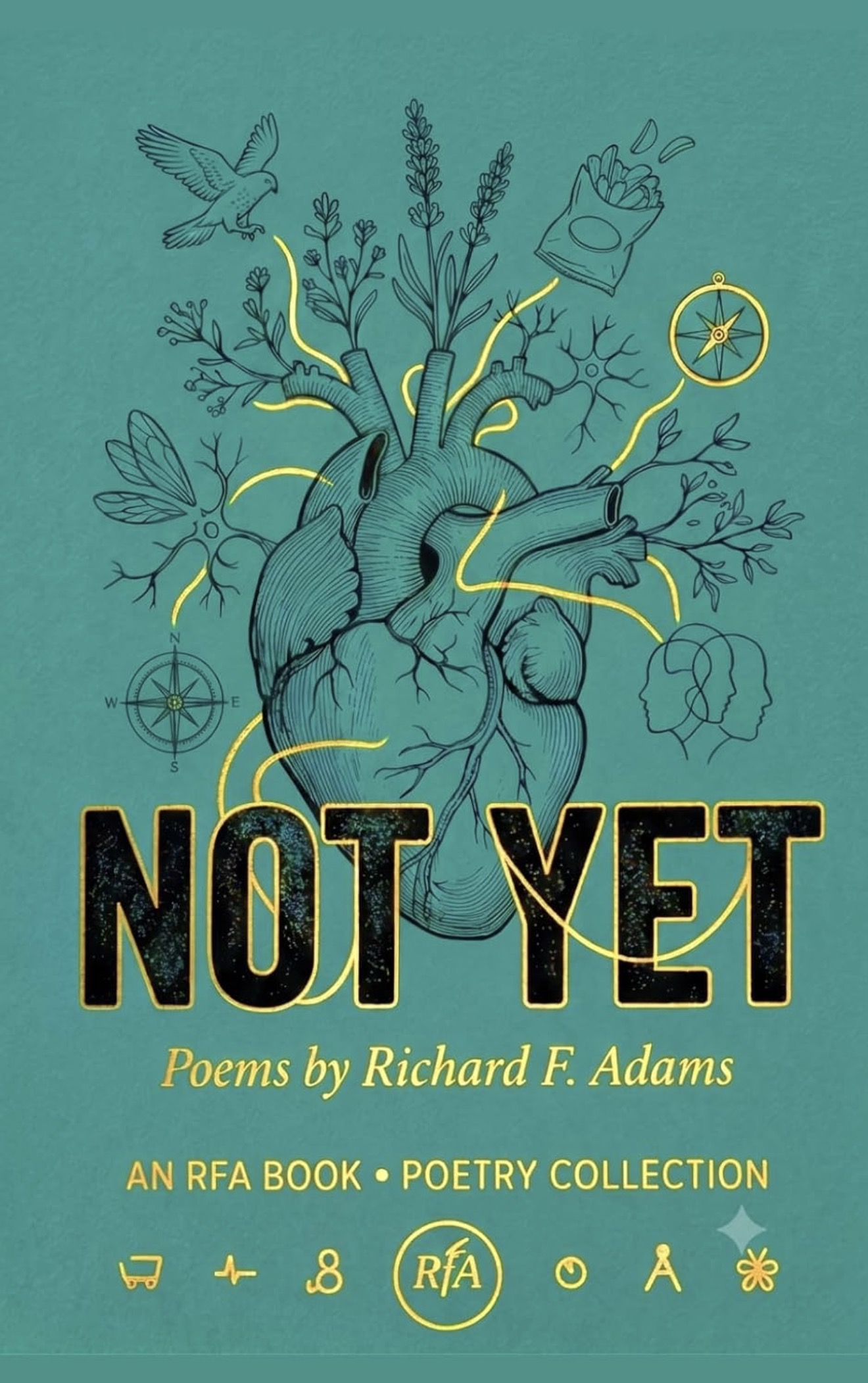
Cover of Not Yet, poems by Richard F. Adams: an anatomical heart sprouting lavender, branches and a bird, on a teal ground

An RFA Book · Poetry Collection

Not Yet

Poems by Richard F. Adams

Ten in the morning, on an NHS ward, the poet’s heart stopped. Someone on a twelve-hour shift knew what to do with her hands. Nobody asked what he was worth first.

Not Yet is a first collection, written over fifteen years — in hospitals, on trains, and in the ordinary hours when something insisted on being written down and wouldn’t take a polite no. These are poems built from scenes rather than arguments: coffee shops, supermarkets, chip shops, train platforms, hospital corridors, Barnsley backyards and Weybridge drives.

It begins in the town that made him. Defoe called Barnsley black for its soot; it stands now in glass, built over the capped shafts of the pits that paid for it. From there the book moves through a Yorkshire childhood — a Triang bike, a father who never said much to your face but never stopped bragging about you in the working men’s club, a system of affection that took forty years to decode. Then out to the clipped lawns and idling engines of the commuter belt, the interview room, the supermarket aisle. And finally back to the ward.

The range is wide and not always solemn. There are sonnets, free verse and poems in broad Yorkshire. There is a mock-scholarly critical edition of Kubla Khan set in a Tesco Express. There is a long poem about the NHS that doesn’t argue its case so much as leave it on your doorstep and ring the bell. There is a red-and-white cat who knew what was coming a week before he went, and had the good manners not to mention it.

At the centre is death — not as metaphor, which is how poetry usually prefers it, safely on a leash, but as something witnessed, endured and returned from.

Not Yet is for anyone who has sat in a waiting room and not known how it ends. For anyone who has lost a parent and found themselves promoted, without interview, to a different place in the world. For anyone who has wondered what it actually means to still be here, and would quite like the answer before closing time.

Direct, dry, occasionally furious, and unwilling to look away.

IV. About

A working life across pictures, words and systems.

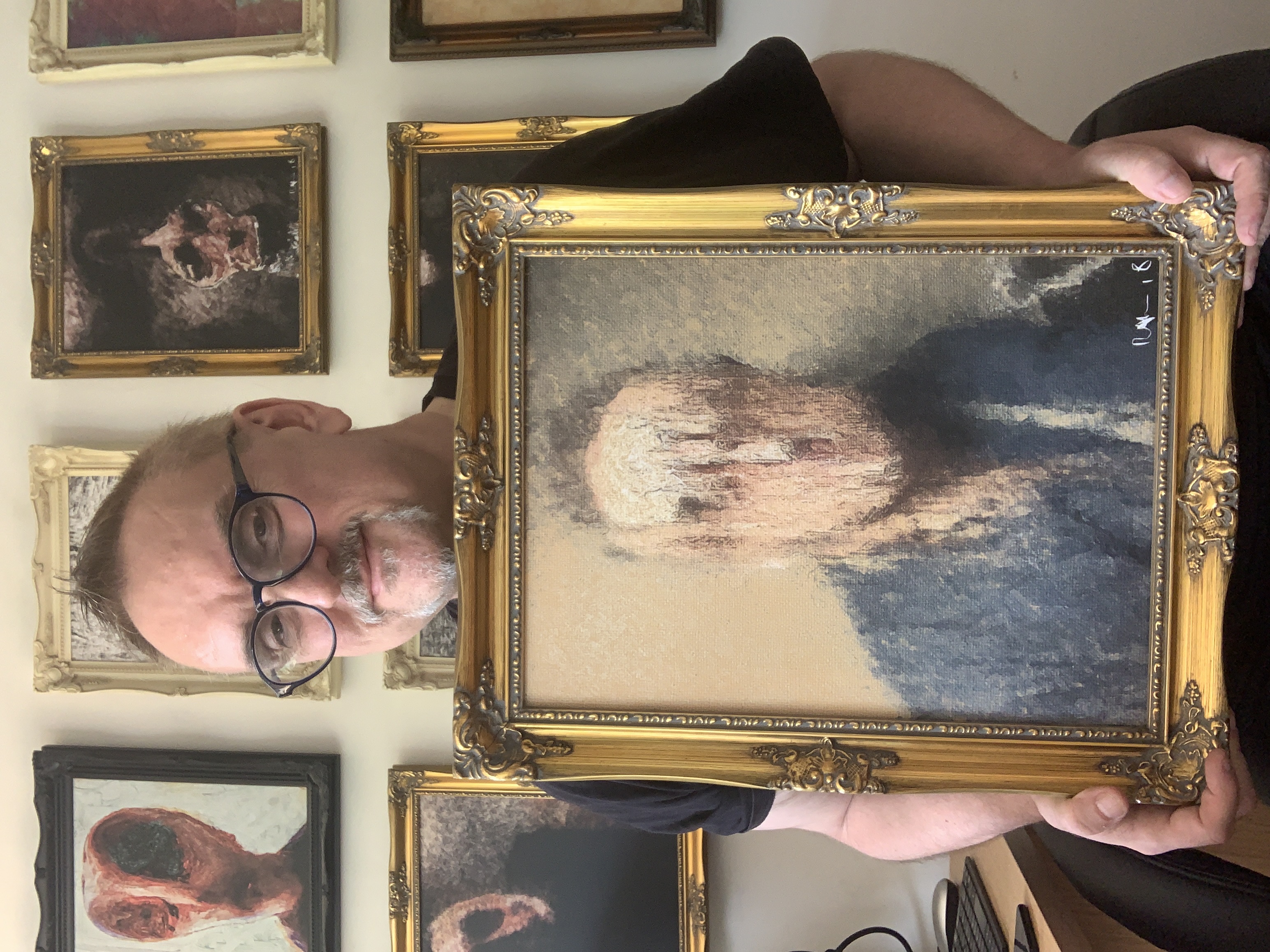
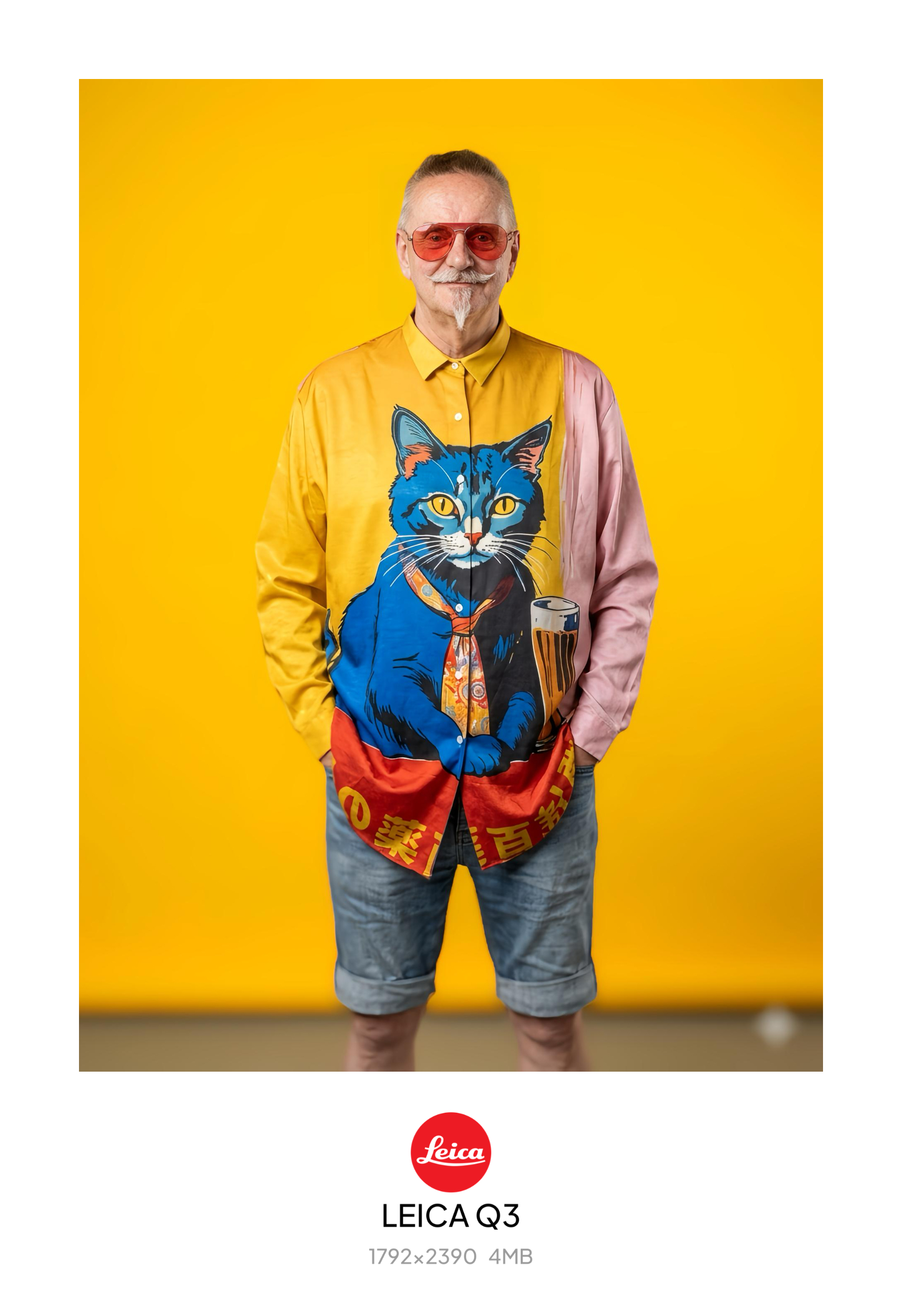
Portrait of Richard F Adams

Richard F Adams · Portrait

Three decades across media, games, academia and technology. BBC, RSC, Aviva, Microsoft Studios, BSkyB. Currently Head of IT Architecture inside UK rail, governing an enterprise estate across a group of operating companies.

Former Visiting Senior Fellow and Visiting Professor. Member of the RSA, BAFTA and the Society of Authors. A Leica, a Stratocaster, a long lockdown, a heart that has been intervened on more than once. The work, in all of its forms, comes from there.

Practice
Computational expressionism, essay, poetry, photograph, music
Influences
Danto, Bourdieu, Rancière, Sontag, Barthes, Scarry, Baudrillard, Kierkegaard
Day Work
Enterprise Architecture, UK Rail
Tools
Leica Q, Squier Stratocaster, a great deal of paint and code

V. Contact

Get in touch.

For prints, commissions, talks, or to say something I should hear. I read everything. I reply when there is something worth saying back.

richard@radams.co.uk
Sends to richard@radams.co.uk